Owls: Strigiformes - Physical Characteristics, Habitat, Diet, Behavior And Reproduction, Owls And People, Conservation Status - GEOGRAPHIC RANGE
Owls are found on every continent except Antarctica. The tropics support the greatest variety of owl species.
Additional Topics
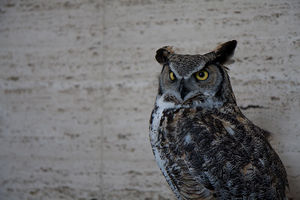
Owls are easy to recognize. They have an almost human appearance, with upright posture, large rounded heads, and large eyes that face forward (most birds have eyes on the sides of their heads). All owls are carnivores, or meat-eaters, and several adaptations make them effective hunters, including a hooked beak for tearing flesh and strong feet tipped with sharp talons, or claws. The toes can be us…
The vast majority of owl species are forest dwellers. Few species live at high elevations or in very dry habitats. Most owls are sensitive to disturbance, but a few species adapt well to living among humans in suburban or urban areas. The eastern screech-owl is a good example. Members of the group called fishing owls are unusual for their habit of living near forest streams or in mangrove swamps a…
All owls are carnivores. They catch small animals with their feet, kill them with a bite to the neck, and swallow them head-first. Most owls hunt from a raised perch. They sit, watch, and listen, then swoop or glide to their prey. At the last minute, they swing their legs forward and spread their talons to strike. Very large owls (such as eagle-owls) take medium-sized mammals such as rabbits, skun…
Most owls are active at night and sleep by day. Usually owls roost in sheltered spots—thick foliage or a branch close to a tree trunk. Some people think owls are "tame" because roosting owls may allow humans to come quite close. Actually, this behavior is an adaptation for avoiding detection by predators. If they're disturbed, owls pull their feathers in tight to look s…
Owls have always inspired the human imagination. A Paleolithic rock painting of an owl is one of the oldest known human drawings. The Bible describes owls as birds of waste places and forbids eating them. In many cultures owls are considered bad omens or creatures of the underworld, probably because they fly at night and have spooky-sounding calls. The sight or sound of an owl is thought to warn o…
As of 2003, the IUCN lists seven owl species as Critically Endangered, facing an extremely high risk of extinction, or dying out, in the wild; nine species as Endangered, facing a very high risk of extinction in the wild; and eleven species as Vulnerable, facing a high risk of extinction in the wild. A number of owl species occur on only one small island or in one small area. That makes these spec…
Citing this material
Please include a link to this page if you have found this material useful for research or writing a related article. Content on this website is from high-quality, licensed material originally published in print form. You can always be sure you're reading unbiased, factual, and accurate information.
Highlight the text below, right-click, and select “copy”. Paste the link into your website, email, or any other HTML document.
User Comments Add a comment…
over 1 year ago
sarah » moti_chicken_boti ((at)) hotmail dot com
dude thx for the info really needed tht!!!
almost 2 years ago
Natalia » xgorematerial ((at)) onet dot eu
Thanks for the information, it has really helped me with my reasearch project. =]
about 2 years ago
jessica » vyanntom ((at)) aol dot com
owls rule!!!!!!!!!!!!!!!!!!!!!!!!!!!!!!!!!!!!!!!!!!!!!!!!!!!!!!!!!!!!!!!!!!!!!!!!!!!!!!!!!!!!!!!!!!!!!!!!!!!!!!!!!!!!!!!!!!!!!!!!!!!!!!!!!!!!!!!!!!!!!!!!!!!!