Turbellarians: Turbellaria
Physical Characteristics, Habitat, Diet, Behavior And Reproduction, Freshwater Planarian (dugesia Tigrina): Species AccountsGEOGRAPHIC RANGE, TURBELLARIANS AND PEOPLE, CONSERVATION STATUS
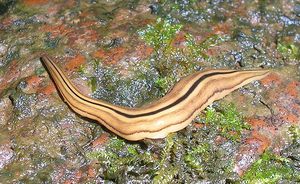
FRESHWATER PLANARIAN (Dugesia tigrina): SPECIES ACCOUNTS
NO COMMON NAME (Notoplana acticola): SPECIES ACCOUNTS
OYSTER LEECH (Stylochus inimicus): SPECIES ACCOUNTS
Turbellarians live all over the world.
The regrowth abilities of turbellarians have been studied extensively by scientists who want to understand healing and cell regrowth in humans. Several species of turbellarians kill food animals such as oysters, and a few species cause disease in ornamental fishes used in aquariums.
The World Conservation Union (IUCN) lists one species of turbellarians as Extinct, or no longer in existence.
Additional topics
- Flukes: Trematoda - Physical Characteristics, Behavior And Reproduction, Lancet Fluke (dicrocoelium Dendriticum): Species Accounts, Human Blood Fluke (schistosoma Mansoni): Species Accounts - GEOGRAPHIC RANGE, HABITAT, DIET, FLUKES AND PEOPLE, CONSERVATIO
- Acoels: Acoela - Physical Characteristics, Behavior And Reproduction, No Common Name (convolutriloba Longifissura): Species Account - GEOGRAPHIC RANGE, HABITAT, DIET, ACOELS AND PEOPLE, CONSERVATION STATUS
- Turbellarians: Turbellaria - Physical Characteristics
- Turbellarians: Turbellaria - Habitat
- Turbellarians: Turbellaria - Diet
- Turbellarians: Turbellaria - Behavior And Reproduction
- Turbellarians: Turbellaria - Freshwater Planarian (dugesia Tigrina): Species Accounts
- Turbellarians: Turbellaria - No Common Name (notoplana Acticola): Species Accounts
- Turbellarians: Turbellaria - Oyster Leech (stylochus Inimicus): Species Accounts
- Other Free Encyclopedias
Animal Life ResourceJellyfish, Sponges, and Other Simple Animals