Sponges: Porifera
Physical Characteristics, Behavior And Reproduction, No Common Name (soleneiscus Radovani): Species Accounts, Bird's Nest Sponge (pheronema Carpenteri): Species AccountsGEOGRAPHIC RANGE, HABITAT, DIET, SPONGES AND PEOPLE, CONSERVATI
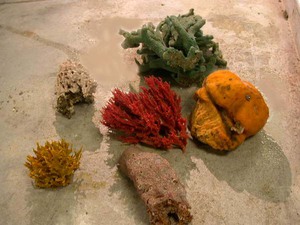
NO COMMON NAME (Soleneiscus radovani): SPECIES ACCOUNTS
BIRD'S NEST SPONGE (Pheronema carpenteri): SPECIES ACCOUNTS
FRESHWATER SPONGE (Spongilla lacustris): SPECIES ACCOUNTS
Sponges live all over the world.
Most sponges live in the sea, but a few species live in freshwater. Many sponges live on reefs. Most sponges need a firm surface on which to attach, such as rocks or the skeletons of dead sponges and coral. Other sponges live on sand or mud at the bottom of the deep sea. Freshwater sponges live in lakes and streams.
Sponges eat tiny particles such as bacterial plankton that they filter from the water that flows through them. A few sponges, however, are carnivorous (kar-NIH-vuh-rus), or meat eating. They engulf and digest small crustaceans (krus-TAY-shuns), or water-dwelling animals that have jointed legs and a hard shell but no backbone.
Some sponges produce compounds that can be used to make drugs for fighting diseases caused by viruses and bacteria. Other sponges are harvested and sold as bath sponges.
Sponges are not threatened or endangered.
Additional topics
- Placozoans: Placozoa - Physical Characteristics, Behavior And Reproduction - GEOGRAPHIC RANGE, HABITAT, DIET, PLACOZOANS AND PEOPLE, CONSERVATION STATUS
- Jellyfishes Getting to Know Corals Sponges and Other Simple Animals
- Sponges: Porifera - Physical Characteristics
- Sponges: Porifera - Behavior And Reproduction
- Sponges: Porifera - No Common Name (soleneiscus Radovani): Species Accounts
- Sponges: Porifera - Bird's Nest Sponge (pheronema Carpenteri): Species Accounts
- Sponges: Porifera - Freshwater Sponge (spongilla Lacustris): Species Accounts
- Other Free Encyclopedias
Animal Life ResourceJellyfish, Sponges, and Other Simple Animals